Tag: buy Diablo IV Items (page 1 of 1)

Diablo 4 Complete Sanctuary Interactive Map Guide

Exploring Sanctuary has always been one of the most important parts of Diablo 4. From hidden Altars of Lilith to Nightmare Dungeons, World Bosses, Strongholds, and Helltide events, the game’s massive open world is packed with valuable content that directly impacts progression.

Why Interactive Maps Matter in Diablo 4

Diablo 4’s world is enormous compared to previous Diablo games. Sanctuary contains multiple large regions, each filled with activities and hidden progression systems.

These regions include:

·Fractured Peaks

·Scosglen

·Dry Steppes

·Kehjistan

·Hawezar

·Nahantu

Every zone contains important objectives tied to character progression, including Renown rewards, Altars of Lilith, Strongholds, side quests, and dungeon unlocks.

Without a proper map tool, players can easily miss critical rewards that significantly improve character power. This is especially true in Season 13, where efficient farming routes heavily influence how quickly players can optimize Diablo 4 Items and progress into Torment difficulties.

Interactive maps simplify this process by tracking nearly every collectible and activity in the game world.

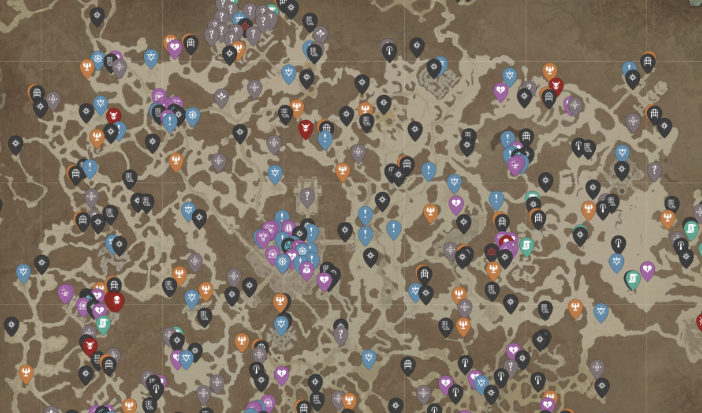
What the Diablo 4 Sanctuary Interactive Map Shows

Modern Diablo 4 interactive maps offer far more than basic navigation.

According to Game Rant’s complete Sanctuary map guide, players can use interactive tools to locate nearly every important activity and collectible in the game.

Popular map features include:

·Altars of Lilith

·Waypoints

·Dungeons

·Strongholds

·Cellars

·World Boss locations

·Helltide spawn zones

·Legion Events

·Side quests

·Rare elite enemies

·Seasonal content locations

These tools are especially valuable for players farming endgame Diablo 4 Items because efficiency becomes increasingly important at higher levels.

Altars of Lilith and Renown Farming

One of the biggest reasons players use interactive maps is to complete Altars of Lilith and Renown objectives.

Altars of Lilith provide permanent account-wide bonuses, including:

·Increased stats

·Additional Murmuring Obols

·Maximum Paragon points

·Skill points

Collecting every Altar of Lilith remains one of the most important progression steps for new seasonal characters.

Renown rewards also grant major benefits, including:

·Extra potion charges

·Skill points

·Paragon points

·Increased Obol capacity

Many players prioritize Renown completion early because these bonuses significantly improve farming efficiency later in the season.

Using Interactive Maps for Endgame Farming

Interactive maps become even more valuable during endgame progression.

Season 13’s endgame heavily revolves around efficient farming routes for:

·Helltides

·Nightmare Dungeons

·Infernal Hordes

·World Bosses

·Tormented Bosses

·Horadric events

Players farming high-end Diablo 4 Items often use interactive maps to minimize downtime between activities and maximize loot-per-hour efficiency.

Helltide Optimization

Helltides remain one of the best farming activities in Diablo 4.

Interactive maps help players locate:

·Mystery chests

·Blood Maiden events

·Tortured Gifts

·Elite enemy spawn areas

·Living Steel chests

Efficient Helltide routing dramatically improves farming speed for crafting materials, gold, and Unique Diablo 4 Items.

Nightmare Dungeon Planning

Nightmare Dungeon farming is another area where interactive maps provide major advantages.

Several community-created map tools now display:

·Dungeon layouts

·Objective locations

·Monster density

·Sigil recommendations

·Boss encounters

This allows players to target the most efficient dungeons for XP and loot farming.

World Boss and Legion Event Tracking

Interactive maps also help players track timed world events.

World Bosses remain one of the best sources of:

·High-end Diablo 4 Items

·Crafting materials

·Greater Affix gear

·Unique item drops

Meanwhile, Legion Events offers:

·Fast XP

·Obols

·Equipment

·Seasonal progression materials

Tracking event timers through interactive maps ensures players never miss valuable farming opportunities.

Nahantu and Lord of Hatred Expansion Zones

The Lord of Hatred update introduced Nahantu, a new jungle-themed region inspired by Diablo 2’s Kurast areas.

Interactive maps now help players navigate:

·Nahantu Strongholds

·Spiritborn content

·Seasonal objectives

·New dungeons

·Hidden exploration rewards

Because the region contains dense environmental design and layered pathways, map tools are especially useful for efficient exploration.

Best Interactive Map Websites

Several major websites currently offer excellent Diablo 4 interactive maps.

Map Genie

Map Genie remains one of the most popular Diablo 4 mapping tools thanks to its detailed filtering options and clean interface.

Players can track:

·Completed objectives

·Altars of Lilith

·Dungeon completion

·Seasonal activities

·Hidden collectibles

D4Builds Interactive Map

D4Builds also provides a highly detailed Sanctuary map with strong community support.

This tool is particularly useful for:

·Endgame farming routes

·Helltide tracking

·Boss spawn locations

·Seasonal events

Many players also choose to buy Diablo IV gold to accelerate progression even further by funding:

·Masterworking upgrades

·Horadric Cube crafting

·Enchanting rerolls

·Boss material purchases

·Endgame gear optimization

Combining efficient map usage with proper resource management dramatically improves progression speed.

Final Thoughts

Diablo 4’s Sanctuary is massive, and interactive maps have become one of the most important tools for efficient progression in Season 13. Whether you are hunting Altars of Lilith, farming Helltides, tracking World Bosses, or collecting endgame Diablo 4 Items, a complete interactive map can save enormous amounts of time.


Diablo 4 Wanderer’s Guide: 10 Quality of Life Tips You Might Have Missed

Ever found yourself thinking, “There has got to be an easier way to do this in Diablo 4”? You’re not alone. Sanctuary is filled with hidden quality-of-life features that can transform your gameplay experience. Whether you are looking to save time while respeccing or want to buy Diablo 4 Gold to fund your next build, these tips will save you time, frustration, and countless clicks. Here are 10 tips that will save you time, frustration, and countless clicks.

1. Speed Through Paragon Board Respecs

Respeccing your Paragon Board used to mean clicking through hundreds of nodes one by one. Not anymore.

· For Mouse and Keyboard: Simply hold the Control button and click on the node you want to reach. The game will automatically allocate all the necessary points along the path. While you may need to adjust if the automatic path isn’t optimal, two clicks are infinitely better than five—or fifty.

· For Controller: Press and hold the assign button instead of tapping. The game will fill in the path automatically, saving you from button-mashing through your entire point pool.

· Pro Tip: This works on all platforms. Console players can connect a mouse and keyboard to their Xbox or PlayStation for this functionality, just as PC players can use controllers. The cross-input support is fully integrated.

2. Unlimited Mount Speed with Cooldown Reduction

Did you know your mount benefits from your character’s cooldown reduction stats? Check your stats panel and scroll down—cooldown reduction caps at 75% for everyone, and it directly affects your mount’s spurs.

How it Works:

· Without cooldown reduction, your spurs regenerate slowly, leaving you waiting between sprints

· With high cooldown reduction, your spurs regenerate almost instantly

· Your spur cooldown starts at 5 seconds instead of 7 with enough CDR

Build a “Riding Gear” Set: Keep a separate set of gear with cooldown reduction on:

· Helmet

· Gloves

· Rings

· Amulet

When you’re racing to a Legion event or have minutes before a World Boss spawns, swap to your riding gear and sprint across the map without interruption.

3. Favorite Waypoints for Instant Teleports

Tired of scrolling through waypoints to find your preferred hub? Use the favorite system. Open your map and look for the star icon next to each waypoint. Click it to favorite any location—whether it’s the main hub near the Pit, a central city, or your favorite farming spot.

The Magic: Once favorited, simply hit your teleport button and you’ll automatically return to that waypoint. No menu navigation, no searching. Perfect for quickly returning to town to grab your riding gear before a world boss.

4. Master the Armory for Build Swapping

The Armory (located in every major city—look for the symbol that resembles two crossed swords) is one of the most underutilized tools in the game.

What the Armory Does:

· Saves complete builds including gear, skills, and Paragon boards

· Swaps everything with one click

· Perfect for transitioning between farming builds, bossing setups, and speed-farming configurations

· Example: Save your “Hammer of the Ancients” build, then create a “Rend Earthquake” farming build. When you want to switch, just select the build and hit “Equip.”

Critical Limitations to Know:

What SwapsWhat Doesn’t Swap
Gear piecesAspects (if using same gear)
SkillsGems
Paragon BoardsRunes (with restrictions)

Rune Warning: If you have the same rune equipped in multiple pieces across different builds, the Armory may fail to swap. Remove conflicting runes first or ensure your rune setups are completely distinct between builds.

5. Swap Runes and Gems Anywhere

You don’t need to visit the Jeweler every time you want to adjust your runes or gems. Open your inventory and:

· Click on a socketed item

· Select the rune or gem you want to replace

· Choose a new one from your collection

· The interface automatically rotates through your available options, letting you experiment with different combinations on the fly. This is especially useful when testing new builds or adjusting for specific content.

6. Quick-Check Your Best Aspects at the Occultist

At the Occultist, open the Codex of Power and type “equip” (or “equipped”) in the search bar. This filters to show only the aspects currently equipped on your character.

Why This Matters:

· Each aspect you salvage gets added to your Codex at its current roll value

· Your equipped gear retains whatever aspect value you imprinted originally

· If you’ve since salvaged a better version of that aspect, your equipped gear is now outdated

· The search function highlights exactly where each aspect is equipped on your character model and in your inventory, making it incredibly easy to identify which gear needs upgrading. No more manually checking each piece against your Codex.

7. Organize Your Stash with Custom Tabs

Stash space is precious in Diablo 4. Maximize it with the edit feature:

Click the edit icon on any stash tab to:

· Name the tab (e.g., “Catch All,” “Legendaries,” “Uniques,” “Mythics”)

· Choose an icon that matches the tab’s purpose

When a tab fills up, you immediately know it’s time to review its contents. This system helps you maintain organization without endless scrolling through a disorganized stash. Create dedicated tabs for:

· Gear you’re saving for alts

· Aspects for future builds

· Boss summoning materials

· Emergency riding gear sets

8. Teleport Directly to Bosses and Between Nightmare Dungeons

Boss Teleports: Click any dungeon entrance on your map and teleport directly to it—no more walking across multiple zones to reach that Nightmare Dungeon or Capstone.

Nightmare Dungeon Chaining: Here’s the real time-saver—after killing the final boss in a Nightmare Dungeon, immediately open another Nightmare Dungeon sigil from your inventory. The game will instantly teleport you to the new dungeon with no loading bar and no need to leave your current location.

This is perfect for:

· Chaining Whisper cache runs

· Farming specific dungeon types

· Running through your hoarded sigils efficiently

9. Teleport to Party Members Mid-Dungeon

Playing with friends and fell behind? Maybe real life intervened, or your dog needed attention? Open your Social menu, find your party member, and select “Teleport to Party Member.” You’ll instantly appear at their location, regardless of how far through the dungeon they’ve progressed. No more sprinting through empty hallways trying to catch up while your party fights the final boss without you. This works on controller too—navigate to the party screen and select the teleport option.

10. Hidden Teleport Locations You Didn’t Know Existed

Beyond dungeons and waypoints, several key locations now support direct teleportation:

· The Pit: Once a portal is open (after someone in your party starts one), click it on your map to teleport directly inside.

· Training Grounds: Located in either Ked Bardu or Kurast Bazaar, the Training Grounds is a complete testing facility featuring:

· Target dummies with customizable options

· Occultist

· Blacksmith

· Armory

· Stash

· Jeweler

· Healing well

· Click the Training Grounds on your map to teleport there instantly—no walking required.

The Undercity: Once a party member opens an Undercity run, click the portal on your map to join them inside.

Final Thoughts

These ten quality-of-life features represent just a fraction of the thoughtful systems Blizzard has built into Diablo 4. From the Paragon Board shortcut to the comprehensive Training Grounds, each one is designed to get you back to what matters most: slaying demons and finding better loot. Of course, if you ever want to skip the grind and buy cheap Diablo IV Items, we highly recommend checking out MMOEXP for all your gearing needs. Have your own hidden tips? Share them with fellow wanderers. And remember—whether you’re racing to a World Boss, testing a new build, or chaining Nightmare Dungeons, Sanctuary moves faster when you know the shortcuts. Happy hunting, wanderer.

Diablo 4 Season 11 Crown of Lucion: Location, Drop Sources, and Best Build Synergies

The Crown of Lucion is widely regarded as one of the strongest Ancestral Unique helms in Diablo 4 Season 11, delivering an exceptional mix of survivability, utility, and explosive damage scaling. While its unique effect introduces a demanding resource-cost penalty, the payoff is enormous-capable of pushing certain builds to damage levels few other helms can rival.

In this guide, we’ll break down Crown of Lucion stats and unique effects, the most efficient farming methods, best class and build synergies, and why this helm is considered a top-tier endgame item for nearly every class.

What Is the Crown of Lucion in Diablo 4?

The Crown of Lucion is an Ancestral Unique Helm available to all classes in Diablo 4. Its identity revolves around rewarding aggressive, high-frequency resource spending. Each time you use a skill that costs resources, you gain a stacking multiplicative damage bonus at the cost of increased resource expenditure.

Stats and Unique Effects of the Crown of Lucion

The Crown of Lucion features premium affixes that scale exceptionally well through mastercrafting, ensuring it remains relevant even at the highest difficulty tiers.

Affixes (Post-Mastercrafting Potential)

·+457 Maximum Life

(Up to +685 with mastercrafting)

·8.8% Cooldown Reduction

(Up to 13.2% with mastercrafting)

·+8.0% Lucky Hit Chance

(Up to 12.0% with mastercrafting)

·+490 Shadow Resistance

(Up to +735 with mastercrafting)

These stats alone make the helm highly competitive, offering durability, cooldown efficiency, and utility that benefit nearly every endgame build.

Unique Effect Explained

The Crown of Lucion’s defining power lies in its unique effect:

“Each time you use a Skill with a Resource Cost, gain 15%[x] increased damage, and the Resource Cost is increased by 30%[+] for 4 seconds, stacking up to 5 times.”

At maximum stacks, this provides up to 75% multiplicative damage, one of the largest damage bonuses available on a single gear slot in Diablo 4.

Why This Effect Is So Powerful

·Multiplicative scaling: The bonus is [x], meaning it multiplies your total damage rather than adding to it.

·Fast stacking: Builds that spam skills can reach full stacks almost instantly.

·High uptime: With constant resource use, stacks are easy to maintain during combat.

The downside-higher resource costs-requires careful build planning, but for optimized setups, the damage gain far outweighs the drawback.

Best Classes and Builds for Crown of Lucion

Because its effect triggers on resource spending, the Crown of Lucion shines in builds that cast skills rapidly and consistently.

Best Class Synergies

Rogue

·Twisting Blades

·Rapid Fire

·Flurry

Rogues naturally thrive on high attack speed and resource cycling, making stack maintenance effortless.

Barbarian

·Whirlwind

·Rend

·Double Swing

Barbarian builds often feature strong Fury generation, allowing them to absorb the increased cost while enjoying massive damage scaling.

Sorcerer

·Incinerate

·Chain Lightning

·Ball Lightning variants

Mana sustain builds benefit greatly, especially those with high Lucky Hit synergy.

Druid

·Werewolf Shred builds

·Werebear Pulverize spam

·Storm-based rapid casting setups

Spirit-heavy Druid builds can fully exploit the stacking mechanic.

Necromancer

·Blood Surge

·Bone Spear (with strong Essence generation)

Necromancers with Essence recovery mechanics can maintain stacks during boss fights and elite encounters.

In short, if your build revolves around frequent resource use, the Crown of Lucion is a natural fit.

How to Get the Crown of Lucion in Diablo 4

The Crown of Lucion drops from two primary endgame sources, both of which are accessible in Season 11. However, one stands out as the most efficient.

1. Farming Crown of Lucion Through Infernal Hordes (Best Method)

Required Item: Infernal Compass

Infernal Hordes are currently the best overall farming activity for Ancestral Unique items in Diablo 4. Players unlock them through The Eyes of the Enemy questline and can scale difficulty for improved loot quality.

At the end of each Infernal Hordes run, players choose rewards from the Spoils of Hell, including:

·Spoils of Equipment

·Spoils of Materials

·Spoils of Weapons

·Spoils of Jewelry

To maximize your chances of obtaining the Crown of Lucion, always select Spoils that include helm drops or general Diablo 4 Items.

Why Infernal Hordes Are the Most Efficient Farm

·Extremely high elite density

·Reliable, unique drop rates

·Player-selected loot categories

·Scales well at higher tiers

·Short, repeatable runs with minimal downtime

If you’re targeting the Crown of Lucion specifically, upgrading other key Diablo 4 Items along the way-Infernal Hordes should be your primary farming loop.

2. Drops from the Hoard of Lord Zir

·Location: Ancient’s Seat, Darkened Way, Fractured Peaks

·World Tier: Torment or higher

·Required Materials: 12× Exquisite Blood

Lord Zir remains one of the most reliable boss-farming targets due to his focused loot pool. Defeating him unlocks a hoard that consumes Exquisite Blood to open, offering a strong chance at unique items.

How to Farm Exquisite Blood

·Blood Maiden encounters during Helltides

·Legion Events

·Tribute of Titans in Kurast Undercity

While slower than Infernal Hordes, Lord Zir is an excellent supplemental farming option.

Why the Crown of Lucion Is One of Diablo 4’s Best Unique Helms

The Crown of Lucion stands at the top of the unique helm hierarchy for several reasons:

1. Enormous Multiplicative Damage Bonus

A fully stacked 75%[x] damage increase is unmatched by most other helms in the game.

2. Excellent Defensive and Utility Stats

Maximum Life, Shadow Resistance, Cooldown Reduction, and Lucky Hit Chance cover multiple endgame survival and optimization needs.

3. Universal Build Compatibility

Nearly every class and build uses resource-spending skills, making the Crown highly flexible.

4. Effective in All Endgame Content

·Nightmare Dungeon pushing

·Helltide farming

·Boss ladder progression

·Group play

·Infernal Hordes

Whether farming naturally or accelerating progression by choosing to buy Diablo 4 Items, the Crown of Lucion remains a top-tier endgame staple.

Final Thoughts

The Crown of Lucion is one of Diablo 4 Season 11’s most impactful unique items, offering a rare combination of survivability, utility, and unmatched multiplicative damage. While it demands careful resource management, builds that can sustain its cost are rewarded with incredible performance across all endgame activities.

If your build thrives on rapid skill usage and resource cycling, the Crown of Lucion isn’t just an upgrade-it’s a game-changing centerpiece worth chasing.

Diablo 4’s Perfect Candidate for a New Season 9 Lair Boss: Elias, Fallen Horadrim

Diablo 4’s seasonal cycle has finally hit its stride. By Season 9, the ARPG juggernaut has ironed out much of its early growing pains. Quality-of-life changes, the Horadric Powers system, and the deeper boss ladder have injected much-needed longevity into the endgame loop. Yet for all the improvements, one area still feels thin: the Lair Boss system.

For most hardcore players, the thrill of facing Sanctuary’s greatest horrors eventually fades into monotony. Grinding the same few arenas, farming the same materials, and summoning the same bosses dozens of times in a row has become routine. The problem isn’t power scaling or material costs-it’s the lack of variety, especially in the Greater Lair Boss tier.

Right now, the loop boils down to endlessly farming Andariel and Duriel to build towards Belial, with some players running 20+ Andariel fights back-to-back just to progress. That treadmill grinds even the most hardened demon-slayer down. Thankfully, Blizzard already has a ready-made solution sitting in their lore: Elias, the Fallen Horadrim, the immortal traitor from the campaign.

Why Elias Is the Ideal Next Lair Boss

From both a design and a lore perspective, Elias is the perfect candidate for a Greater-tier Lair Boss in Season 9.

1. Blizzard has precedent for reusing campaign bosses. Andariel, Duriel, Astaroth, and Lord Zir all transitioned smoothly into endgame encounters. Elias, with his layered mechanics, is already designed in a similar mold.

2. Elias’ fight structure fits Lair Boss expectations. In the campaign, he already has multiple phases, arena shifts, and transformation mechanics-hallmarks of a raid-style boss.

3. Visual identity and lore depth are built in. Elias isn’t a generic monster. His Horadrim betrayal, voice acting, and cinematic presence make him one of Diablo 4’s most memorable villains.

4. He is canonically immortal. Thanks to Lilith’s ritual, Elias cannot die in the traditional sense. His campaign defeat is merely a setback, not an ending-leaving the door wide open for his return.

Simply put: Blizzard doesn’t need to invent a new monster from scratch. Elias is already primed for endgame reincarnation.

Current Lair Boss Line-up Breakdown

Right now, Diablo 4’s Lair Boss ladder looks like this:

·Initiate Tier: Varshan, Grigoire, Beast in the Ice, Lord Zir, Urivar (Vessel of Hatred).

·Greater Tier: Andariel, Duriel, Harbinger of Hatred (DLC).

·Exalted Tier: Belial.

The imbalance is glaring. Base-game players only have two Greater Lair Bosses to grind, both required for Belial progression. Adding Elias would dramatically increase variety and make the Greater tier far more engaging, without demanding a massive development overhaul.

How Elias Could Function as a Greater Lair Boss

Blizzard could easily integrate Elias using a material-based system, just like existing Lair Bosses. Imagine a new drop like “Shard of the Triune Ritual” or “Fallen Horadrim Remnant”, earned by defeating Initiate-tier bosses. Collect or buy Diablo 4 materials, and Elias can be summoned as the third Greater-tier challenge.

Proposed Fight Structure

Phase 1 – Elias, Master of the Triune

·A spell-slinging battle where Elias summons ritual spikes and homing blood sigils.

·Cultist waves spawn periodically, pressuring players to manage adds.

Phase 2 – Arena Shift

·Upon “defeat,” Elias vanishes in a burst of blood magic.

·Players chase him through a gauntlet filled with exploding runes and teleporting ambush enemies.

·This adds dynamic pacing not currently seen in other Lair Boss fights.

Phase 3 – Elias, Fallen Horadrim

·His rage-fueled final form takes center stage.

·Fast-paced attacks, tri-directional blood waves, teleport spam, and illusory clones.

·Duriel’s relentless pressure meets Astaroth’s chaotic spellwork-forcing players to adapt.

Fight Hooks and Flavor

·No Lorath ally this time-Elias faces the player alone, amplifying the tension.

·Difficulty scaling on par with Duriel, ensuring Elias feels like a legitimate Greater-tier gatekeeper.

·Unique loot table, featuring Triune-themed caster gear or Necromancer-focused Diablo 4 Items like curse-enhancing staves and blood-magic rings.

The Broader Gameplay Benefits

Adding Elias as a Lair Boss wouldn’t just pad out the roster-it would improve the entire endgame loop.

·Breaks up monotony. Players no longer need to chain Andariel and Duriel runs endlessly. Elias adds fresh variety to the Greater tier.

·Encourages new builds. Duriel emphasizes poison resistance and melee endurance. Elias would push casters and anti-magic defenses, rewarding different build archetypes.

·Lore enrichment. His return strengthens the ongoing Horadrim storyline while hinting at future expansion arcs.

·Minimal dev cost. Unlike designing a brand-new monster, Blizzard can leverage Elias’ existing assets, animations, and mechanics with just a few upgrades.

This combination of practical and thematic value makes him one of the most obvious choices for immediate inclusion.

Lore Justification: Elias Isn’t Finished

Perhaps the strongest case for Elias comes from the story itself. His arc throughout Diablo 4 revolves around:

·Immortality. Granted by Lilith’s ritual, Elias cannot be destroyed by ordinary means.

·Obsession. His devotion to Lilith and the Triune ensures he has a motive to keep resurfacing.

·Unfinished business. Players cripple him in the campaign, but never shatter his Horadric sigil-the one artifact that could end him permanently.

This leaves his fate deliberately ambiguous. He must reconstitute somewhere in Sanctuary, slowly regathering his power, ready for revenge. From a narrative standpoint, his return as a Lair Boss doesn’t just make sense-it fills a key gap and raises hype for Diablo 4’s 2026 expansion, where the Horadrim are expected to play a central role again.

Final Verdict: Elevate Elias Immediately

With Diablo 4’s endgame finally on solid footing in Season 9, Blizzard has the perfect opportunity to double down on what’s working. The Lair Boss ladder is one of the most compelling systems added since launch, but it needs more variety, especially in the Greater tier.

Elias, the Fallen Horadrim, is the perfect solution. He’s lore-rich, mechanically complex, visually striking, and already developed. More importantly, his addition would:

·Break the monotony of farming only two Greater bosses.

·Introduce new loot and mechanics tailored to casters and curse builds.

·Tie the seasonal content back to core Diablo lore.

·Set up future expansions while delivering immediate benefits to the gameplay.

The community has been asking for more endgame variety. Blizzard has the answer staring them in the face. It’s time to elevate Elias into a Greater-tier Lair Boss and let players face the immortal traitor once this time, with the full fury of Sanctuary’s strongest heroes.

Diablo 4 Season 9:Fastest Gold Farming Route Revealed

Gold is the unsung hero of Diablo 4. Whether you’re upgrading gear, rerolling affixes, or tweaking your Paragon board, you’ll burn through millions in no time. While Gold is easy to come by early on, the endgame demands a steady and efficient farming strategy-and until now, that’s been hard to find.

Season 9 finally fixes that.

With new updates centered around Nightmare Dungeons, Diablo 4 introduces a repeatable, reliable way to earn massive amounts of Gold. Let’s dive into why this new route is the most effective method to fatten your wallet in the current season.

Everything meaningful in Diablo 4 endgame revolves around Gold. Here’s where it all gets spent:

1.Tempering to fine-tune your item stats

2.Masterworking gear, which skyrockets in cost per level

3.Imprinting and rerolling affixes for build perfection

4.Upgrading Gems to stay competitive

5.Respeccing skills or Paragon choices when you want to pivot your build

Once you’re deep into optimizing, every tweak is another hit to your stash. That’s why a solid Gold farming strategy is no longer optional-it’s essential.

The Game Changer:Horadric Affixes in Nightmare Dungeons

Season 9 introduces Horadric Affixes-a powerful twist to Nightmare Sigils. Of particular interest to Gold farmers is one affix that changes everything:Horadric Gold Reserve.

Why Horadric Gold Reserve Is the New Gold Standard

1.Fills the dungeon with bonus Gold chests, easy to spot and loot

2.Chests scale in value based on dungeon level and World Tier, offering tens of thousands per pop

3.Pairing this with Gold Find buffs can net you hundreds of thousands of Gold per run

When paired with the Gold Find affix, which boosts all Gold drops by 30%, this turns into a hyper-efficient farming loop.

Even better, Season 9 Escalating Nightmare system allows you to run these dungeons back-to-back without heading back to town-saving time and keeping the loot flowing.

How to Set Up the Most Efficient Gold Route

Step 1:Target Sigils With Gold Affixes

The goal is simple:collect Nightmare Sigils that include either:

Horadric Gold Reserve

Gold Find

Use the Occultist to craft or reroll Sigils until you land one or both affixes.

Step 2:Build for Speed, Not Difficulty

Gold farming is a volume game. The more dungeons you clear quickly, the more profit you generate per hour. Choose a dungeon tier you can reliably clear in under 6 minutes.

Build with these priorities:

High movement speed to zip through maps

Strong AoE to melt packs fast

Sustainability so you’re not bogged down by potions or deaths

Moderate survivability, just enough to avoid setbacks

Step 3:Stack Gold Bonuses

To maximize returns:

Equip Gold Find-enhancing gear,Your legend begins with the right gold. Shop Diablo 4 gold with confidence at MMOexp.

Use elixirs and seasonal effects that increase Gold gain

Explore thoroughly-many Gold chests are hidden off the main path

Break objects and loot everything; Horadric Gold Reserve boosts environmental Gold spawns too

Bonus Value:Passive Glyph XP Farming

Every run through a Nightmare Dungeon also gives Glyph XP, which:

1.Boosts your Paragon Board progression

2.Helps you prepare for endgame boss content

3.Means you’re improving two systems at once-your power and your wealth

This dual benefit makes the route even more worthwhile.

What About Old Gold Farming Methods?

Infernal Hordes

1.Can yield Gold from Spoils chests

2.Requires Burning Aether and well-optimized gear

3.Still decent, but much slower than the new method

Trading Uniques

1.Sell rare drops to other players for quick Gold

2.Involves market luck and sometimes third-party sites,Secure your buy Diablo IV Items now, only at MMOexp.

3.Inconsistent, unreliable, and slow

While both are still viable, neither comes close to the efficiency and reliability of Horadric Gold Reserve dungeon runs.

Diablo 4 Season 9 finally delivers a gold farming method that checks all the boxes-fast, rewarding, and seamless with other endgame activities. With the right Sigils, a speed-focused build, and some Gold Find boosts, you’ll be rolling in riches while passively gaining power through Glyph XP.

So if your upgrades are on hold because your stash is empty, skip the auction hustle and leave the old grinds behind. Load up your Sigils, hunt those gold-infused dungeons, and let Season 9 new meta work for you.